
Crab Facts: Claws, Shells & Secret Behaviors
Crabs are crustaceans found on every continent with over 7,000 species. Discover why crabs walk sideways, trade shells, and grow claws stronger than jaws.
Read More
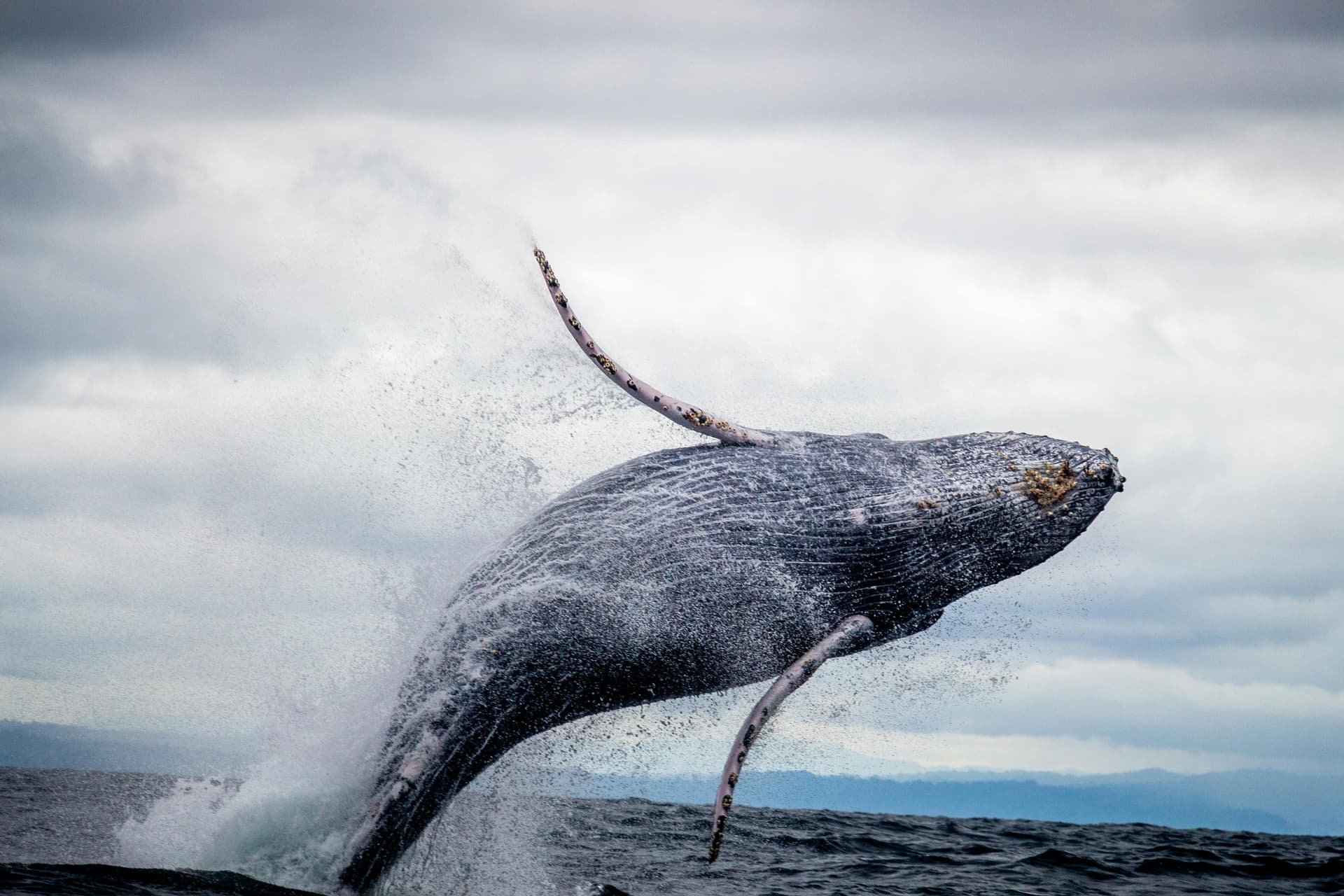
Blue whales are the largest animals ever to exist on Earth, surpassing even the biggest dinosaurs in size and weight. These ocean giants fascinate us.
The blue whale (Balaenoptera musculus) is the largest animal ever known to have lived on Earth, reaching lengths of up to 100 feet and weights of up to 200 tons. To put this in perspective, that's heavier than even the largest dinosaurs that ever lived, including the Argentinosaurus.
Blue whales are truly giants of the ocean. Their heart alone can weigh as much as a small car (about 400 pounds), and their tongue can weigh as much as an elephant (around 2.7 tons). A blue whale's arteries are so large that a human child could theoretically swim through them. Their enormous size is supported by the buoyancy of water. On land, such a massive creature would collapse under its own weight.
Despite their enormous size, blue whales feed primarily on tiny shrimp like creatures called krill, consuming up to 4 tons of them per day during feeding season. They are filter feeders, using baleen plates instead of teeth to strain krill from the water. During feeding season (typically 120 days), a blue whale can consume up to 40 million krill in a single day.
Blue whales are among the loudest animals on Earth. Their calls can reach 188 decibels (louder than a jet engine) and can be heard by other whales from hundreds of miles away. These low frequency sounds travel vast distances through the ocean, allowing blue whales to communicate across entire ocean basins. Scientists believe they use these calls to navigate, find food, and locate potential mates.
Blue whales are found in all the world's oceans except the Arctic. They undertake long migrations between feeding grounds in polar waters during summer and breeding grounds in tropical or subtropical waters during winter. Some populations travel over 10,000 miles annually.
Female blue whales give birth to a single calf after a gestation period of 10 to 12 months. Newborn calves are already massive, measuring about 23 feet long and weighing around 3 tons. They gain approximately 200 pounds per day while nursing on their mother's extremely rich milk (35 to 50% fat content).
Blue whales were hunted nearly to extinction during the 20th century whaling era. At their lowest point, fewer than 1,000 individuals remained. Today, thanks to international protection, the population has recovered to about 10,000 to 25,000, but they remain endangered. Threats include ship strikes, entanglement in fishing gear, ocean noise pollution, and climate change affecting krill populations.
Blue whales evolved to their massive size around 4.5 million years ago, likely driven by ice age changes in ocean food distribution.
Industrial whaling killed approximately 360,000 blue whales in the 20th century, reducing populations by over 99%.
The International Whaling Commission banned blue whale hunting in 1966, one of the first global wildlife protection measures.
Herman Melville's Moby Dick drew from whaling culture, though sperm whales rather than blue whales featured in the story.
Research found blue whale hearts beat as slowly as 2 times per minute during deep dives, stretching the limits of mammal physiology.
Studies discovered blue whales eat up to 16 tons of krill daily during feeding season, gaining 8 pounds per minute.
Scientists recorded blue whale songs getting deeper in pitch over decades, possibly due to population recovery reducing the need to call farther.
Satellite tracking revealed individual blue whales can travel over 10,000 miles in a single year between feeding and breeding grounds.
Blue whales became the symbol of ocean conservation and the anti whaling movement worldwide.
The blue whale's plight helped inspire the Marine Mammal Protection Act and international conservation treaties.
Blue whale watching generates significant ecotourism revenue in coastal communities from California to Sri Lanka.
The species appears frequently in documentaries, books, and environmental education as the ultimate example of Earth's biodiversity.
Before industrial whaling, an estimated 300,000 blue whales swam the world's oceans. They had no natural predators capable of killing healthy adults and had roamed the seas for millions of years as the largest animals Earth had ever produced.
Commercial whaling killed 99% of blue whales in just 60 years. Though protected since 1966, populations have recovered to only about 10,000 to 25,000 individuals. Blue whales now face new threats from ship strikes, fishing gear, noise pollution, and climate driven changes to their food supply. Full recovery may take another century.
A blue whale's tongue weighs as much as an elephant (around 2.7 tons)
Blue whale calves gain about 200 pounds per day while nursing
A blue whale's arteries are so large that a small child could swim through them
Blue whales can hold their breath for up to 90 minutes during deep dives
The largest blue whale ever recorded was 110 feet long and weighed an estimated 190 tons
Blue whale populations have recovered to only 10,000 to 25,000 individuals, still far below pre whaling numbers
Ship strikes and fishing gear entanglement are now the primary threats to blue whale survival
Climate change is affecting krill populations that blue whales depend on for food
Blue whales store massive amounts of carbon in their bodies and their feces fertilizes ocean ecosystems
Ocean noise pollution from shipping may interfere with blue whale communication across their range
How much do you know? Take this quick quiz to find out!
A blue whale's tongue alone weighs as much as an elephant, around 6,000 pounds.
Blue whale arteries are so large that a human child could crawl through them.
Despite their size, blue whales cannot swallow anything larger than a grapefruit because their throats are relatively small.
A baby blue whale gains approximately 200 pounds per day drinking 100 gallons of milk.
Blue whales have belly buttons. As mammals, they are born live and attached to umbilical cords.
The spray from a blue whale's blowhole can shoot 30 feet into the air and be seen from miles away.
Blue whales can grow up to 100 feet (30 meters) long and weigh up to 200 tons (400,000 pounds). They are the largest animals ever to have existed on Earth, larger than any dinosaur.
This article is reviewed by the Pagefacts team.
Editorial Approach:
This article reveals mind boggling facts about the largest animal to ever exist, from hearts the size of cars to tongues weighing as much as elephants, while chronicling how humanity nearly destroyed these ocean giants and the slow recovery now underway.
Explore more fascinating facts in this category
Crabs are crustaceans found on every continent with over 7,000 species. Discover why crabs walk sideways, trade shells, and grow claws stronger than jaws.

Spiders produce silk five times stronger than steel by weight. Discover how spiders fly using electric fields, see in color, and engineer perfect webs.

Jaguars possess the strongest bite of any big cat and kill prey by crushing skulls rather than suffocating. They love swimming and hunt caimans in rivers.